
📖 Japan Stories | 🧰 The Japan Edit
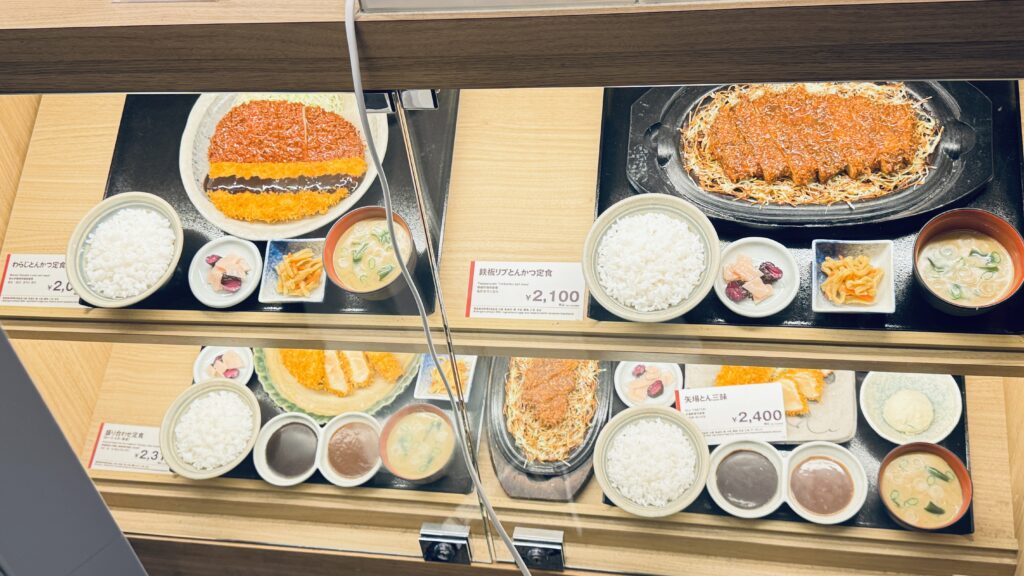
I didn’t know what “waraji tonkatsu” meant when I ordered it at Yabaton. I just knew the table next to me had it, and it looked enormous — two full pork cutlets laid out side by side on one plate, each one glossy with a different sauce.
The name gave it away eventually. Waraji are the straw sandals people used to wear here — and yes, that’s the shape this dish is going for. One cutlet gets a red miso reduction, dark and slightly sweet. The other gets a plain Worcestershire-style sauce. Same cutlet, two completely different personalities, served together so you don’t have to pick.
I asked for the miso side first, and it’s the one everyone in Nagoya will tell you to try — that deep reddish-brown sauce made from fermented soybean paste is basically the city’s calling card. It’s savory in a way regular tonkatsu sauce isn’t, almost stew-like.
That “stew-like” feeling turned out to be exactly right. I looked it up later: the story goes that not long after the war, a regular at a food stall here got impatient waiting for his order and dipped his skewered pork straight into a pot of simmering miso stew on the counter — just to see what would happen. He liked it. So did everyone else who tried it after him. By 1947, that stall had turned into an actual restaurant built around the idea, and it’s been serving the same sauce ever since.
You can tell the place takes its own legend seriously — the mascot is a giant painted pig named Bu-chan, and he’s everywhere: on the sign outside, on the staff uniforms, even printed on the teacups. It’s the kind of unshakeable branding you only get from a dish that’s been famous for almost 80 years.
If you’re ever in Nagoya and see “waraji tonkatsu” on a menu, don’t assume it’s a novelty-sized portion for sharing. It’s just how the dish is supposed to look — two sauces, one plate, no decisions required.